











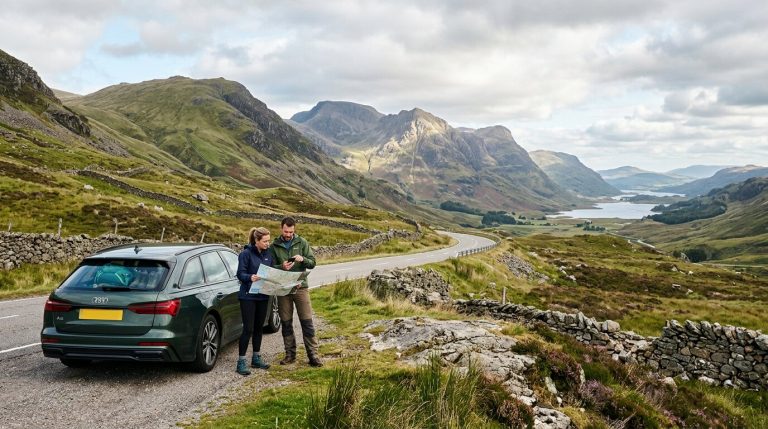
The western Lakes feel remote, but Scotland is closer than many visitors expect. From the western valleys, the border is a morning’s drive away, and plenty of people finishing a week of fell walking start to wonder about carrying on north.
This guide is written for UK travellers already planning a northern England trip who are weighing up whether to add a Scottish leg, and how to get around once they’re there.
The honest answer is that it works best when you pick one Scottish base and give it proper time, rather than trying to see the Highlands and the east coast in the same three days. The checklist below walks through that decision, using two very different bases as examples: Fort William in the western Highlands, and Glenrothes in Fife.
Step 1: decide what you want from the next leg
Before looking at maps, be clear about what kind of days you want. They point to very different places.
- More mountains, more walking, wilder roads. That points west, towards Glen Coe, Ben Nevis and the road to the isles.
- Coast, golf, small harbours and easy day trips to a city. That points east, to Fife, with Edinburgh and Dundee within reach.
- A bit of both. Possible, but it means a long cross-country day in the middle. Be realistic about how much driving you want after a week in the fells.
Step 2: compare the bases
Use this worksheet to compare the two before you commit. Fill in the blank rows with your own dates and plans.
| Fort William (western Highlands) | Glenrothes (Fife) | |
|---|---|---|
| Kind of trip | Mountains, glens, lochs; long scenic drives | Coast, countryside, towns; shorter drives |
| Typical roads | Main routes plus single-track roads with passing places further out | Mostly main roads and motorway links |
| Rail access | Both have stations listed by National Rail: Fort William and Glenrothes with Thornton | |
| City driving on the way | Routes north may pass close to Glasgow or Edinburgh; see the low emission zone note in step 3 | |
| Your nights there | ||
| Your must-do days | ||
| Arrive by (own car / train / other) | ||
| Car needed locally? | ||
Step 3: check the route before you check the car
If you’re driving your own car up from the Lakes, two checks are worth five minutes.
Low emission zones. According to mygov.scot, Scotland has four low emission zones, in the city centres of Aberdeen, Dundee, Edinburgh and Glasgow, enforced by cameras. The page links to an official vehicle checker. If your route or a day trip goes into one of those centres, run your registration through it first. A hire car’s registration can be checked the same way once you have it.
Fuel and time. The western Highlands have fewer filling stations once you leave the main towns. Fill up before heading into the glens, and add time to anything a route planner tells you. Single-track roads are slow for good reasons.
Step 4: if you’re not taking your own car
Some visitors reach the Lakes by train or hand back a hire car at the end of the English leg. Others want to leave the car at home for the long drive and pick one up on arrival. In that case, the Scottish base needs its own arrangements.
Fort William as a separate base
Arriving by rail and hiring locally means the scenic part of the journey is someone else’s job. For a car once you arrive, you could start with the Fort William hire enquiry page. That site lists cars from small hatchbacks to estates and SUVs and says it offers delivery and collection in Fort William. Ask whether it can meet a train or deliver to your accommodation, and what time the car must be handed back on your last day.
Glenrothes as a separate base
For an east-coast stay, you could enquire about car hire in Glenrothes. That site lists cars including compact models, estates, an SUV and seven-seaters, and mentions free delivery and collection in Glenrothes. A seven-seater may matter if you’re travelling as a larger family with walking kit. Ask about the insurance excess and whether it can deliver to a holiday let outside the town.
These are two different websites covering two different places. Don’t assume either can arrange a car in the other location or accept a return there unless it confirms that in writing.
Step 5: confirm return terms before you leave home
- Exact return time and place, and what happens if your train is delayed.
- Mileage terms in writing, especially if you plan long day trips.
- The insurance excess, and what it costs to reduce it.
- Who is allowed to drive, and what each driver must bring. Many hirers ask for a DVLA check code; GOV.UK says it lasts 21 days.
- How fuel is handled on return.
One trip, not two crammed together
The Lakes and the Highlands are close enough to link and different enough to be worth it. The trips that disappoint are usually the ones that tried to squeeze in too much. Pick the base that matches the days you want, give it at least three nights, and leave the other for next year.